


Top War: Battle Game
4.626.48K Reviews
App Specs
- Version
- 1.680.0
- Updated On
- License
- Free
- Downloads
- 50,000,000+
- Developer
- RiverGame
- Categories
- Strategy
- Platform
- Android, iOS
Screenshots
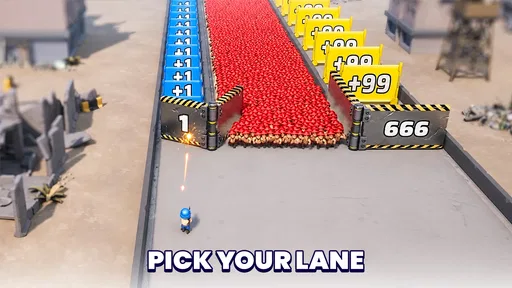
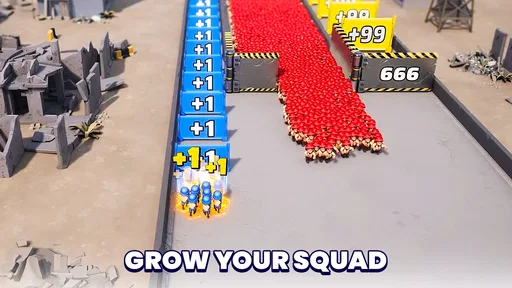
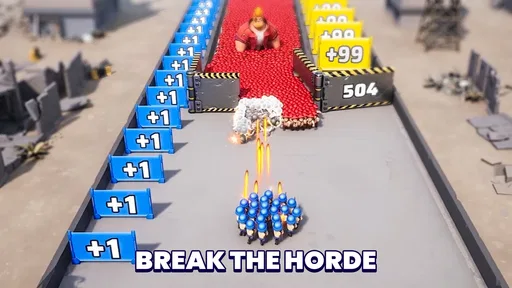
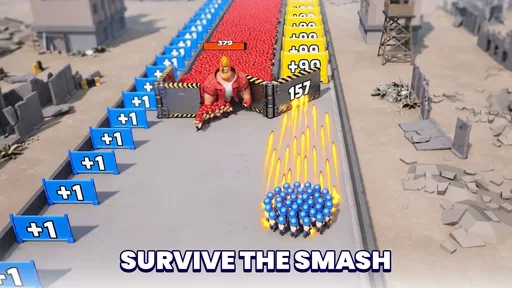
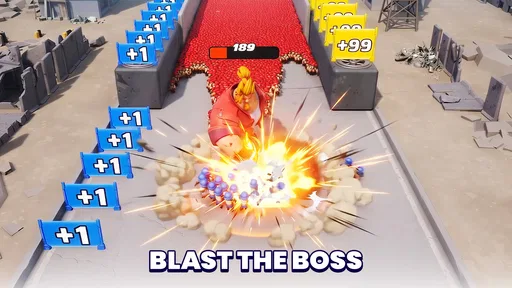
 Analysis by AppCompare
My first impression of Top War: Battle Game is that it wants to make strategy feel lively rather than solemn. Bright colors, compact menus, and a steady stream of things to combine give the screen a busy, playful energy. I found the central idea easy to understand: merge matching units to strengthen them, then use that growing force as part of a wider strategy game. The appeal is immediate, but the pace also asks you to make small decisions repeatedly, so it suits players who enjoy having a clear next task.
That simple opening can be misleading in a useful way. The merging is approachable, yet the game also asks you to think about your base, your troops, and how you want to approach battles. I would describe it as a mobile strategy game with a puzzle-like layer, not a pure merge game and not a traditional, slow-moving battlefield simulator. RiverGame has built a colorful setting around that blend, and the result feels designed for quick check-ins that can gradually turn into longer sessions.
How its world, sound, and strategy fit together
I’ll look at how the game’s colorful presentation and sound shape the feel of its short, recurring strategy sessions, while keeping the merge-and-upgrade choices in view. That mood is part of its appeal, but it also helps explain which players may enjoy its pace and which may prefer a more focused strategy game.
A bright visual language for a busy battlefield
When you first launch Top War: Battle Game, you’re greeted with vibrant colors and an intuitive interface. The game has a unique merging mechanic where you combine units to level up and strengthen your army. It’s like a strategy game with a touch of puzzle-solving, which is awesome because who doesn’t love a good multitasking challenge?
The cartoon style makes the different pieces of the game feel approachable, even when the screen has several goals competing for attention. Rather than relying on realistic military imagery, it uses clear, colorful designs to distinguish units and make progress readable. I think that choice helps the merging loop: when the visual language is light, combining units feels like a satisfying planning task instead of a grim chore. It also gives the game a consistent mood, playful on the surface but focused whenever I’m weighing what to upgrade next.
The tutorial is pretty straightforward and helps you get the hang of things quickly. You’ll be merging your way to a mighty army in no time. What I love is how the game doesn’t just throw you into the deep end; it eases you in and makes sure you’re ready to take on the world—or at least your virtual enemies.
For a new player, I’d treat the first stretch as a chance to learn the rhythm rather than rush through every prompt. The useful habit is to pause before combining units and notice what each merge is helping you accomplish. That small bit of attention can make the board feel less like a pile of taps and more like a series of choices. If you prefer games that explain every long-term system before letting you act, the quick introduction may feel brisk; if you like learning by doing, it is a comfortable way in.
Worth Reading Before You Choose

Baby Panda World Brings Quick Play to Modern Phones, but Its Game Library Feels Busy

ESPN’s Live Game View Makes Following Close Games Easier

QuizzLand Review: A Good Fit for Short Trivia Breaks, Not Every Player

Basketball Stars: Multiplayer Is Fast, but Can It Recover When Matches Go Wrong?

WEBTOON Turns Phone Updates Into a Better Reading Routine

Link to Windows Runs on Shared Habits, Not Social Feeds
Sound and the rhythm of a session
The game’s energetic look is supported by music and battle effects that help give its world a sense of motion. I find that the sound makes ordinary upgrades feel more active, while combat sounds underline the moments when a plan moves from the base to the battlefield. The overall mood remains playful rather than intense, which suits a game that mixes army management with merging. Players who keep their phone muted can still follow the visual action, but the audio adds a little momentum when I’m playing with sound on.
The pacing is less about one uninterrupted campaign-like stretch and more about moving between small jobs: combine, improve, check the base, and decide what deserves attention next. That structure is convenient when I have a few minutes, but it can also encourage me to keep opening the game because there is always another visible step. I’d set my own stopping point before starting a session if I only have a short break. The bright presentation makes time pass quickly, and that is a strength only when it fits the time I actually have.
Gameplay and Features
Now, let’s get into the nitty-gritty of what makes this game tick. The merging mechanic is the heart of the game, but there’s so much more to explore. You can build and upgrade your base, fortify your defenses, and train troops to dominate the battlefield. The game also offers PvP battles, which adds a competitive edge. There’s nothing quite like the thrill of seeing your strategy unfold in real-time against other players.
The key trade-off is that merging and base management pull your attention in different directions. A stronger unit is satisfying, but it is not the only measure of progress when the base and defenses also need care. I get more out of the loop when I choose a priority for a session—perhaps developing the army, perhaps tending to the base—instead of trying to advance every part at once. That is a practical way to keep the game from feeling like a checklist, especially on a small screen where several activities can compete for attention.
PvP gives the strategy a sharper edge because another player’s choices make the outcome feel less predictable than a routine upgrade. It is also the part I would approach with realistic expectations: competitive play is most enjoyable when I am ready to treat a loss as information, not as proof that I need to spend money or rush progress. If you prefer a purely solo experience with no player-versus-player pressure, the competitive side may not be your favorite part. If you like testing a developing plan against people, it gives the wider base-building loop a clear purpose.
Another cool feature is the alliance system. You can team up with friends or other players to take on bigger challenges. It’s a great way to strategize and, let’s be honest, flex your army-building skills. Plus, the social aspect makes it more engaging, as you can chat and plan your next big move.
Alliances change the feel of the game from a private routine into something shared, which can be a real draw if you enjoy coordinating with others. They also come with a time-and-attention trade-off: social play is more rewarding when I can check in and follow what the group is doing, while a player who wants to drop in without interacting may get less from that layer. I’d think about whether I want a game that can become a regular social activity before treating alliance participation as essential. The core appeal remains the merge-and-strategy loop, but cooperation gives it another reason to return.
Where it fits among strategy games
Compared with strategy games that focus mainly on long tactical battles, Top War puts more emphasis on combining units and managing a developing base. Compared with casual merge games, it layers in troop training, defenses, PvP, and alliances. That middle ground is its most distinctive strength: I can make visible progress without needing every session to be a deep tactical exercise, yet there are enough connected systems to give planning some weight.
It is not the best match for someone seeking a historically grounded war simulation, a purely turn-based puzzle, or a quiet single-player game with no social or competitive dimension. Those players may be happier with a more focused alternative in the strategy category. I’d recommend this one to someone who enjoys collecting small improvements, likes a colorful rather than realistic presentation, and is comfortable switching between merging and broader base decisions. The game is free to start, though optional in-app purchases range from $0.99 to $99.99 per item, so I would decide on a spending boundary in advance rather than letting a moment of impatience make that choice.
A realistic way to fit it into a day is to open it during a short break, choose one goal, and leave when that goal is handled. For example, I might use a lunch break to review my units and make a few upgrades, then save competitive play or alliance coordination for a time when I can give it more attention. That separation helps prevent the quick merge loop from turning into an unexpectedly long session. It also makes the game easier to enjoy casually without pretending that every system needs constant attention.
Graphics and Sound
The graphics in Top War are vibrant and cartoonish, which fits the playful yet strategic vibe of the game. It’s not hyper-realistic, but that’s part of its charm. The animations are smooth, and the different units have unique designs that make the game visually appealing.
The sound design is another aspect worth mentioning. From the background music to the sound effects in battles, it all adds to the immersive experience. You’ll find yourself getting lost in the game’s atmosphere, which is exactly what you want from a mobile game.
The version available is 1.621.0, and the game is rated Everyone 10+. It has a 4.4 average from around 739,000 ratings and more than 50 million installs, which suggests that its accessible mix has found a broad audience. Those figures do not tell me whether the particular blend will suit you, though: the better question is whether you enjoy returning to a game for incremental upgrades and whether you want its competitive and social layers. It was released on January 16, 2020, and requires Android 7.0 or later.
Final Thoughts
Overall, Top War: Battle Game is an entertaining blend of strategy and casual gaming. It’s easy to pick up but offers enough depth to keep you engaged for the long haul. Whether you’re a seasoned strategy gamer or a newbie, there’s something in it for everyone.
My recommendation comes with a clear condition: try it if the combination of merging, base development, and player interaction sounds more appealing than a single, tightly focused strategy system. Skip it if you dislike recurring upgrade loops, want a realistic war atmosphere, or would rather avoid competitive and social play altogether. The game is free, so it is easy to sample, but its in-app purchase range makes it sensible to decide beforehand whether you intend to spend. For me, its strongest quality is the way bright art, lively sound, and short decision cycles make planning feel welcoming without removing every strategic choice.
So, if you’re looking for a fun way to pass the time while also testing your strategic skills, give Top War: Battle Game a try. Who knows, you might find yourself becoming the next top commander in the virtual world!
Pros
- Engaging real-time strategy gameplay.
- Vibrant graphics and animations.
- Diverse unit customization options.
- Frequent events and updates.
- Strong community and alliances.
Cons
- Can become pay-to-win over time.
- Resource management can be tedious.
- Repetitive tasks can feel grindy.
- Requires constant internet connection.
- Ads can be intrusive at times.
FAQs for Top War: Battle Game
What is the main objective of Top War: Battle Game?
Top War: Battle Game combines strategy and merging mechanics, where players must build and strengthen their bases to conquer opponents. The primary goal is to expand your territory by merging units and structures, enhancing their capabilities to overpower enemies and progress through various levels and challenges.
How does the merging mechanic work in Top War: Battle Game?
In Top War, merging is a key feature that allows players to combine two units or buildings of the same type and level to create a more powerful version. This mechanic helps streamline gameplay by upgrading your army and infrastructure efficiently, giving you a strategic advantage in battles.
Is Top War: Battle Game free to play, and are there any in-app purchases?
Top War: Battle Game is free to download and play, but it offers in-app purchases for players who want to enhance their experience. These purchases can include resources, special items, and exclusive units that can accelerate progress and provide competitive advantages.
What types of multiplayer interactions are available in Top War: Battle Game?
Top War offers several multiplayer features, including alliances, PvP battles, and cooperative events. Players can join or form alliances to collaborate with others, participate in joint operations, and compete in PvP battles to climb leaderboards and earn rewards. This social aspect enhances the overall gaming experience.
Are there any specific system requirements to play Top War: Battle Game on mobile devices?
Top War: Battle Game requires a stable internet connection and is compatible with most modern Android and iOS devices. It is recommended to have a device with at least 2GB of RAM and a recent operating system version to ensure smooth gameplay and optimal performance.


